September 29, 2025
Stanford’s Martin Luther King, Jr. Research and Education Institute has a new address. The institute made the move from Cypress Hall to Building 370 in early 2025 after more than a year of planning and seven months of construction. And on Tuesday, Oct. 14, a grand opening event will introduce this new home to Stanford and the broader community. RSVPS are highly encouraged.
The Main Quad location reflects the institute’s importance as a resource for the university community and as a destination for campus visitors. Since 1985, when Coretta Scott King chose Professor of History, Emeritus, Clayborne Carson to direct the King Papers Project, Stanford has been dedicated to preserving and promoting the works and legacy of MLK by overseeing the most comprehensive collection of his papers held anywhere in the world. Carson founded the institute in 2005 to support the papers project and launch additional educational activities, work that continues today.
“Our new space, along with our partnership with Green Library to digitize our collection, will propel us toward our vision of being a leading destination for the study and public understanding of the original works of Dr. King and their relevance to contemporary society,” said Lerone A. Martin, the Martin Luther King, Jr. Centennial Professor and director of the institute as well as professor of religious studies and of African and African American Studies in the School of Humanities and Sciences.
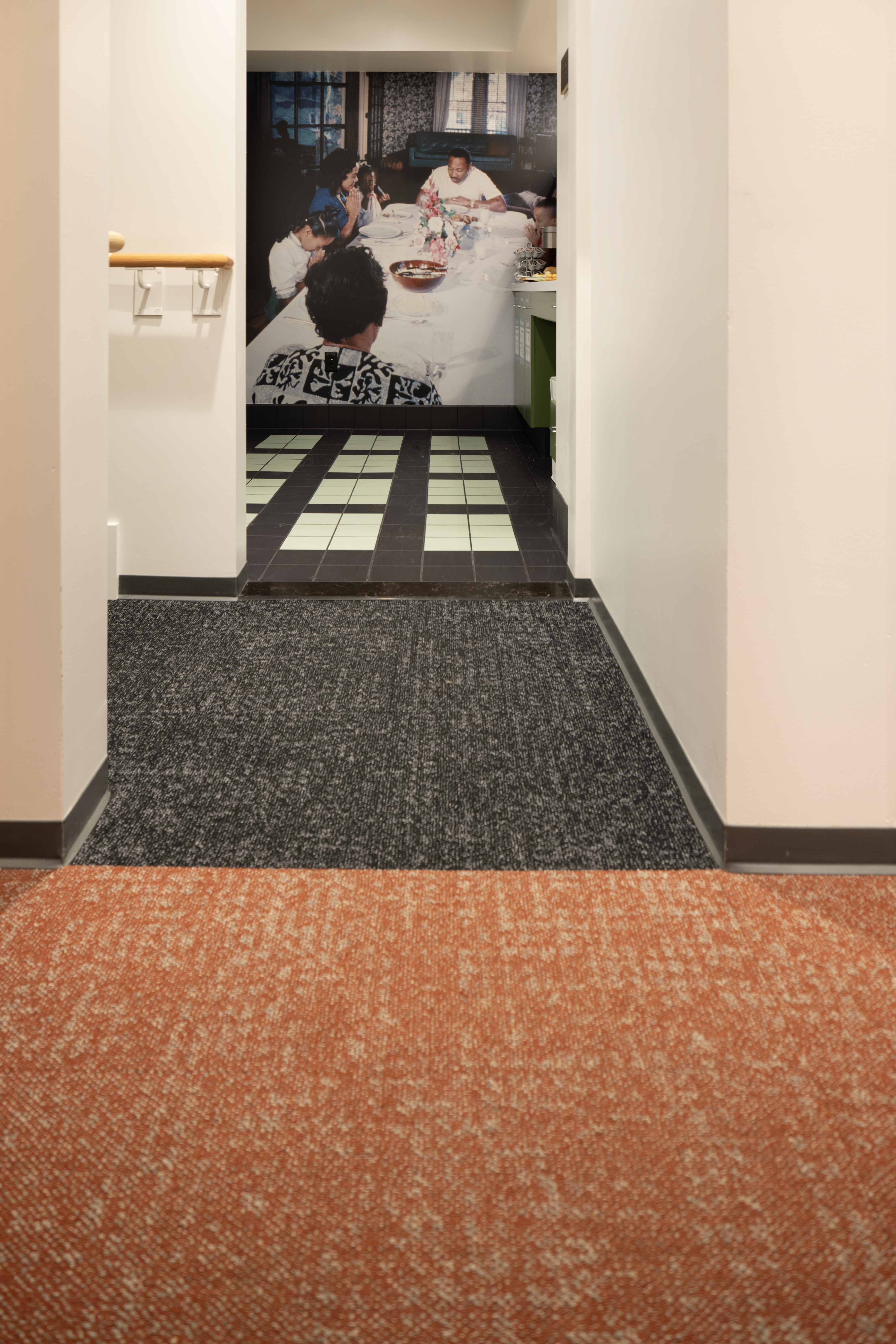
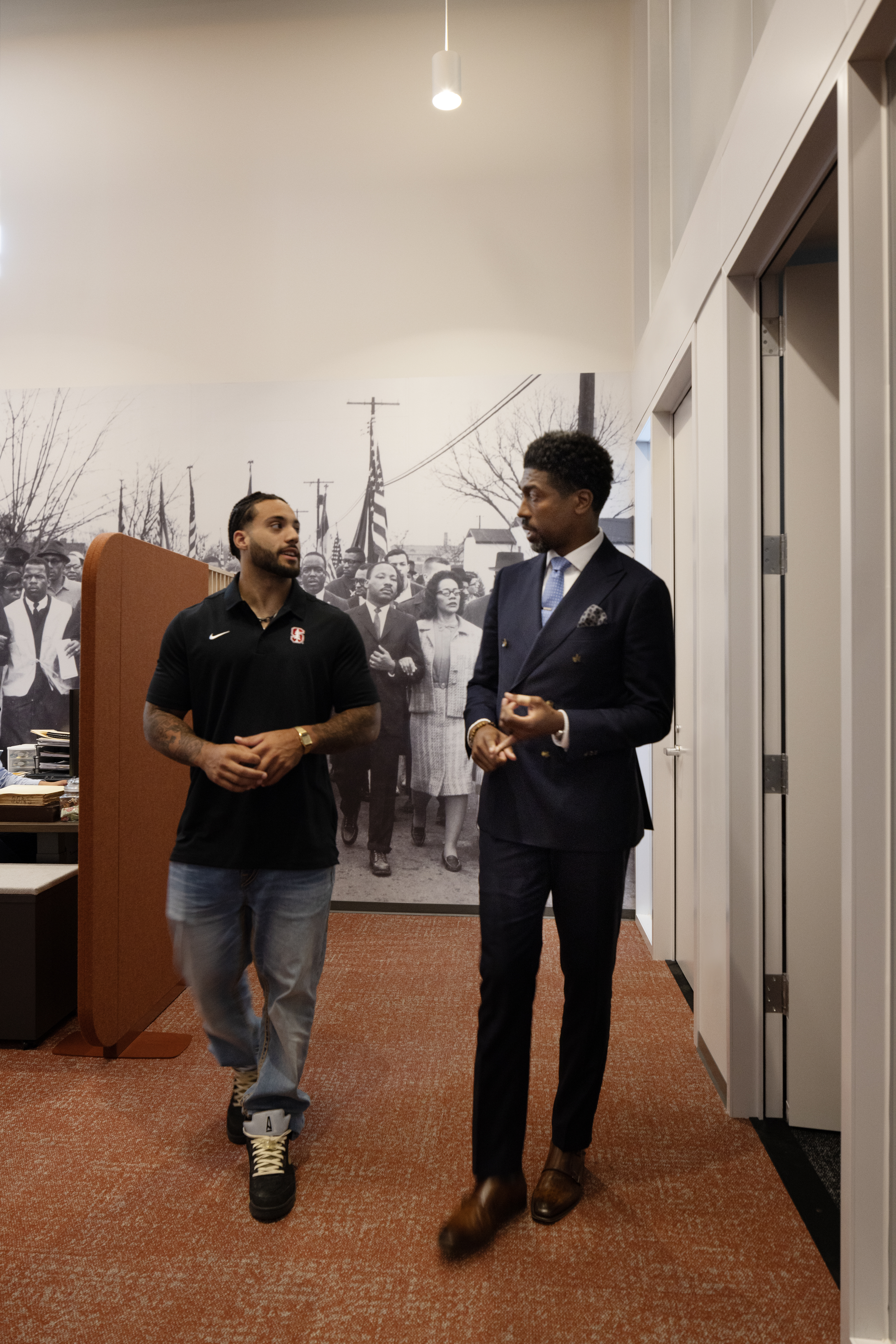
The connection to MLK is apparent throughout the building. The civil rights leader’s image and words grace the walls, and many design details—down to the light fixtures, color of the carpet, and floor patterns—have significance to his life.
Tours of the space will be part of the grand opening event, following a panel discussion at Memorial Church featuring Martin Luther King III and his wife, Arndrea Waters King; Evan Spiegel ’12 ; Marina Limón ’25; and Lerone A. Martin.

Construction to transform Building 370 into the King Institute officially began in May 2024. In designing and building the institute, Leddy Maytum Stacy Architects, a San Francisco firm, followed Design for Freedom principles, which aim to make the building supply chain more ethical.

For example, the firm worked with the contractor to procure materials specifically not produced by forced labor. The commitment to justice in the construction of the institute honors MLK’s work and legacy.


MLK’s childhood spiritual home, Ebenezer Baptist Church in Atlanta, inspired some of the floor materials. The color and pattern of the main hallway’s carpet reflect the church’s red-brick facade, and the black and green tiles of the kitchen recreate those of the church’s fellowship hall.

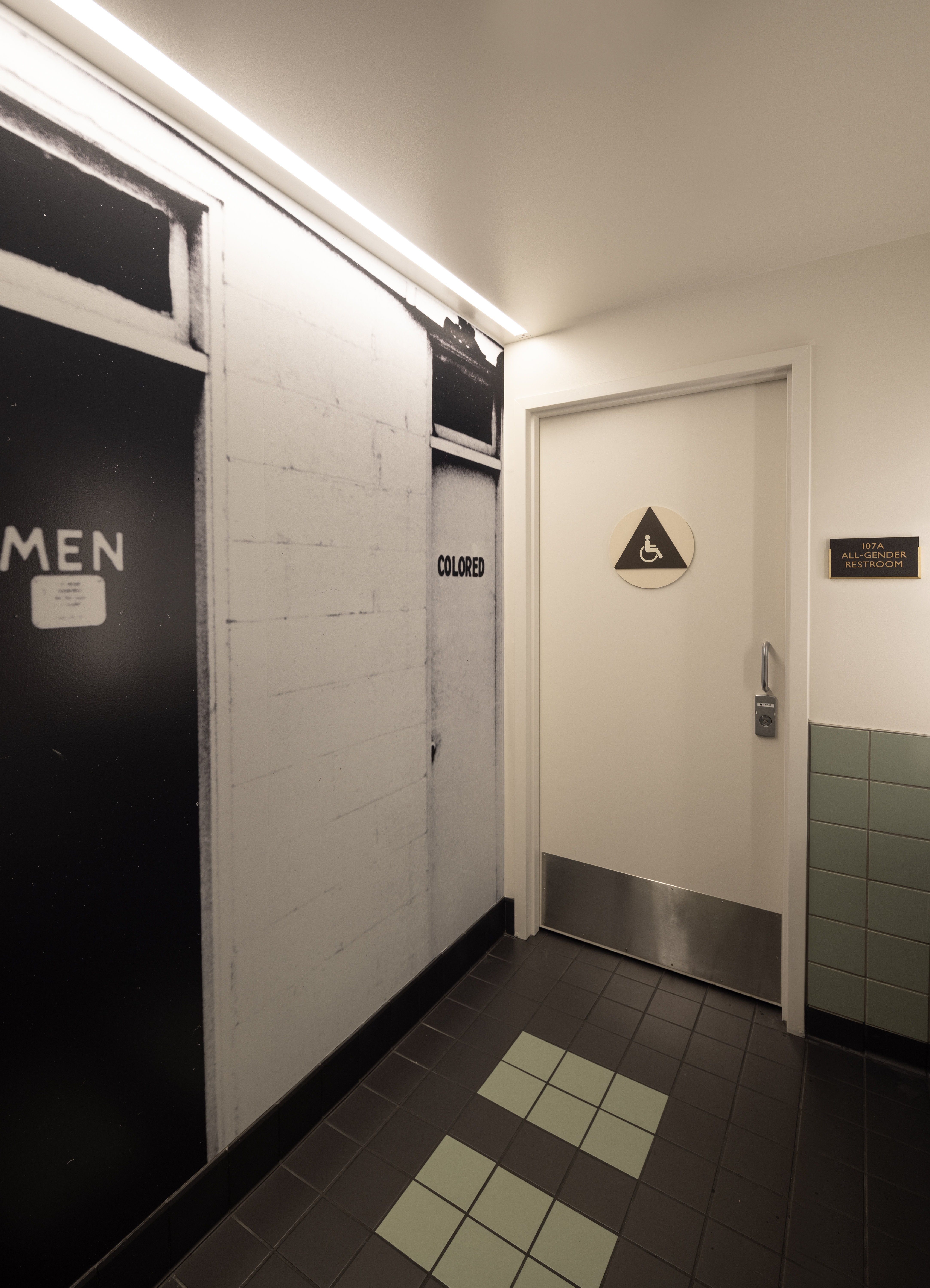
Off the kitchen, a wall-size image of segregated restrooms stands in contrast to the institute’s accessible, all-gender restrooms. Large-scale images and quotes from MLK’s life and times adorn most of the building’s walls.

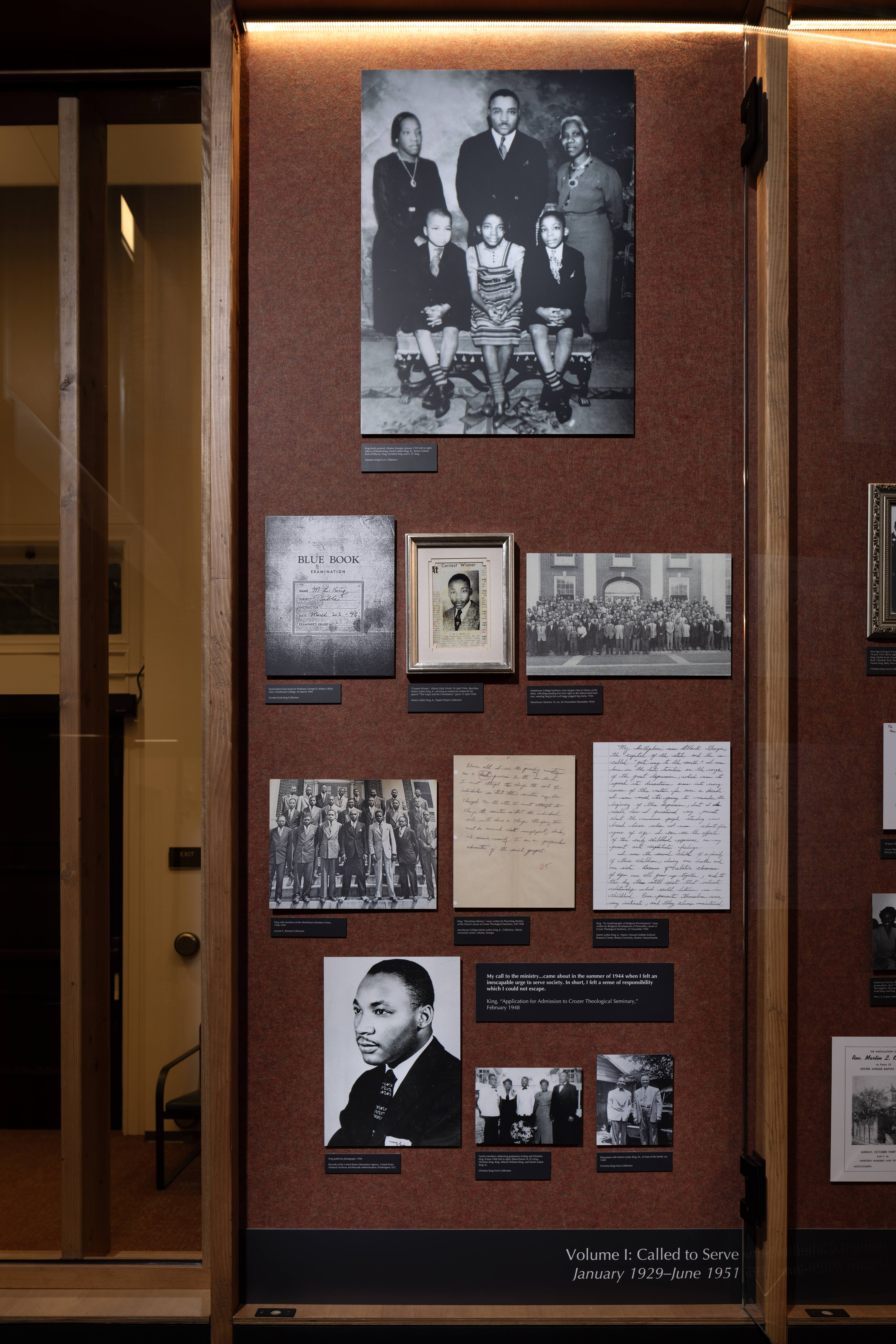
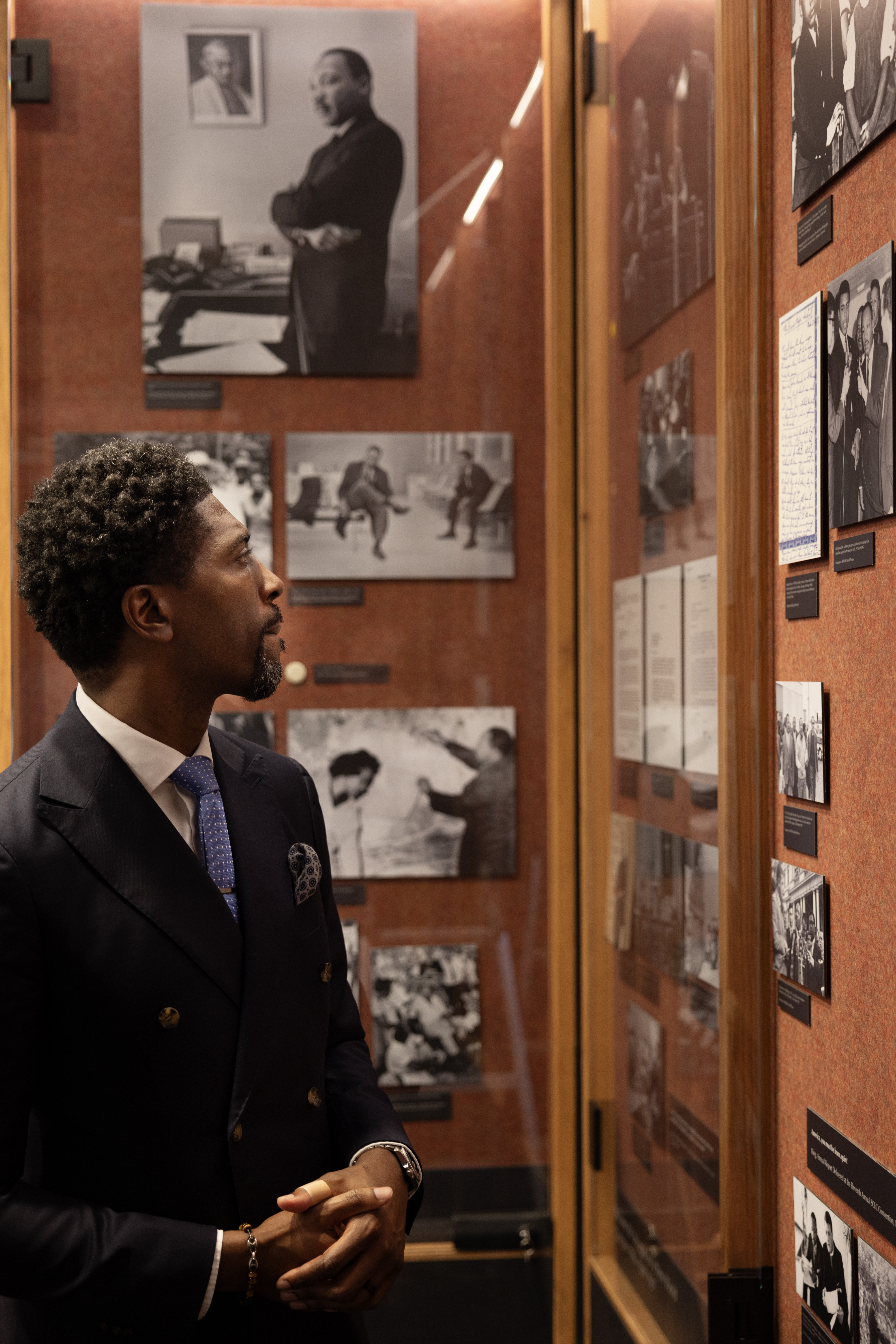
The first item on display shows 10-year-old MLK (seated, far right) with his siblings, parents, and maternal grandmother. Martin Luther King, Jr. was named after his father, who was also a Baptist minister.

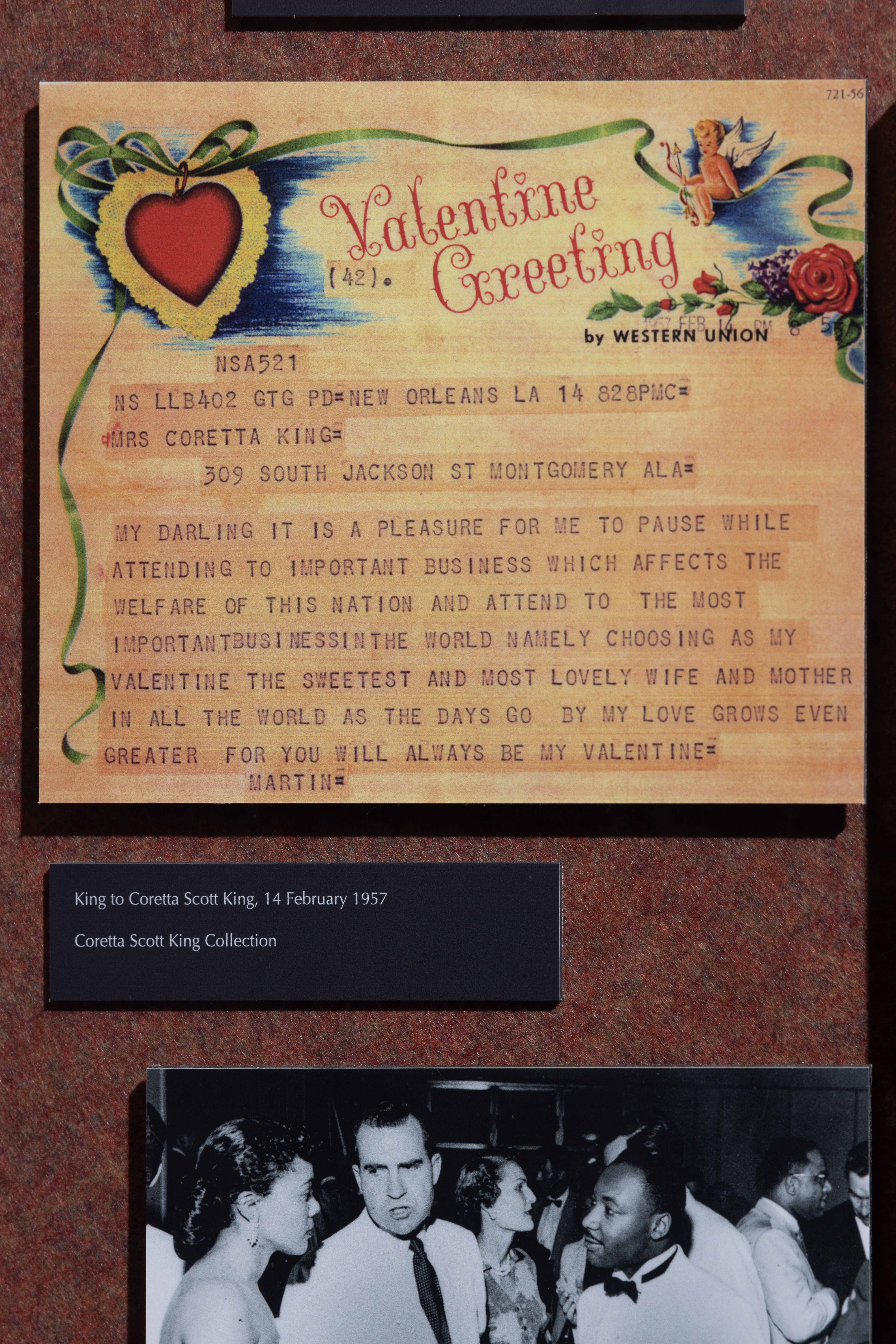
In 1957, MLK sent his wife, Coretta Scott King, a valentine via Western Union telegram. Below, the couple talks with Vice President Richard Nixon in Ghana at the country’s independence celebration the same year.

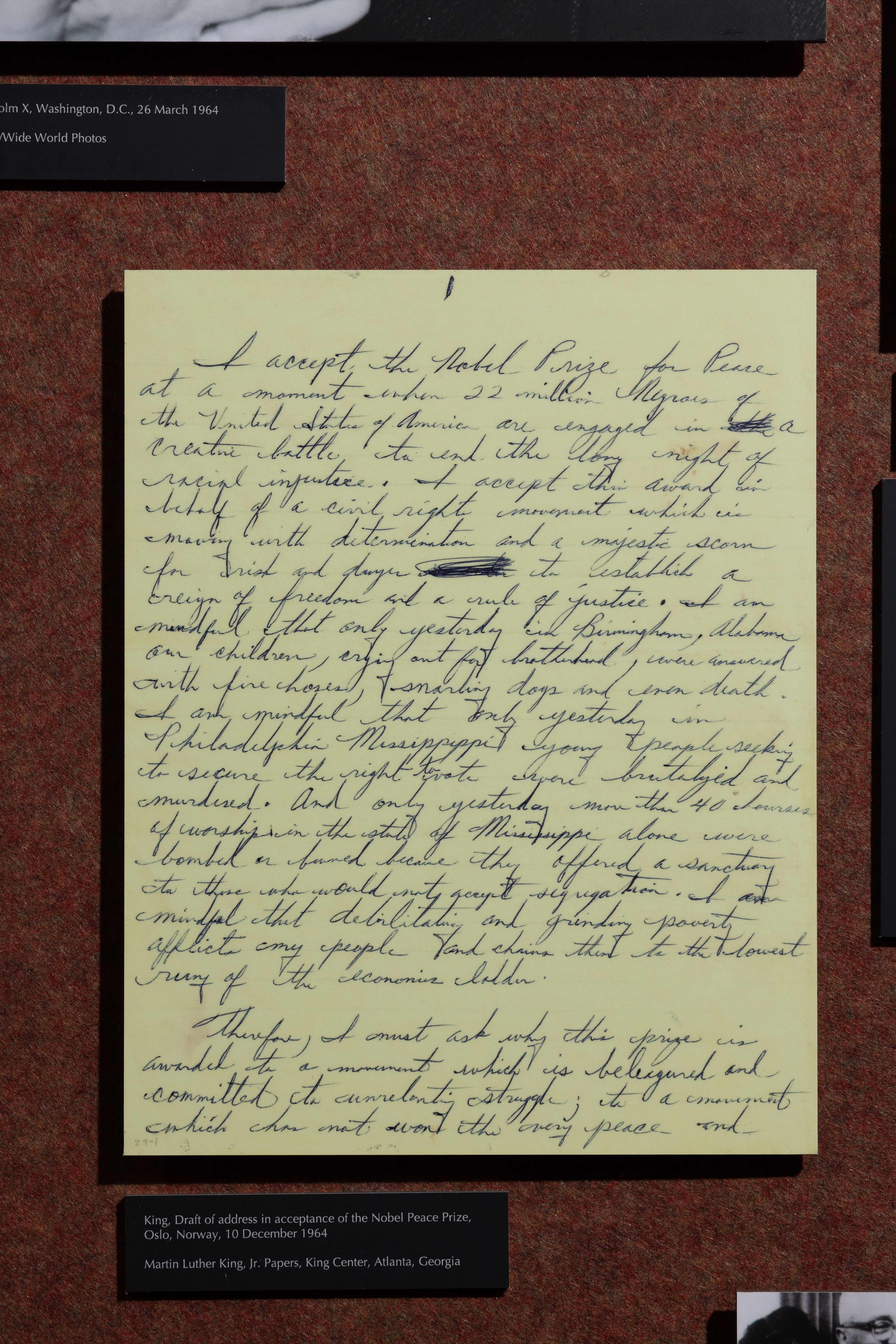
This draft of MLK’s 1964 Nobel Peace Prize acceptance speech is unique because he rarely wrote his words before delivering them. MLK was the 12th recipient of the peace prize and the youngest at the time at 35.

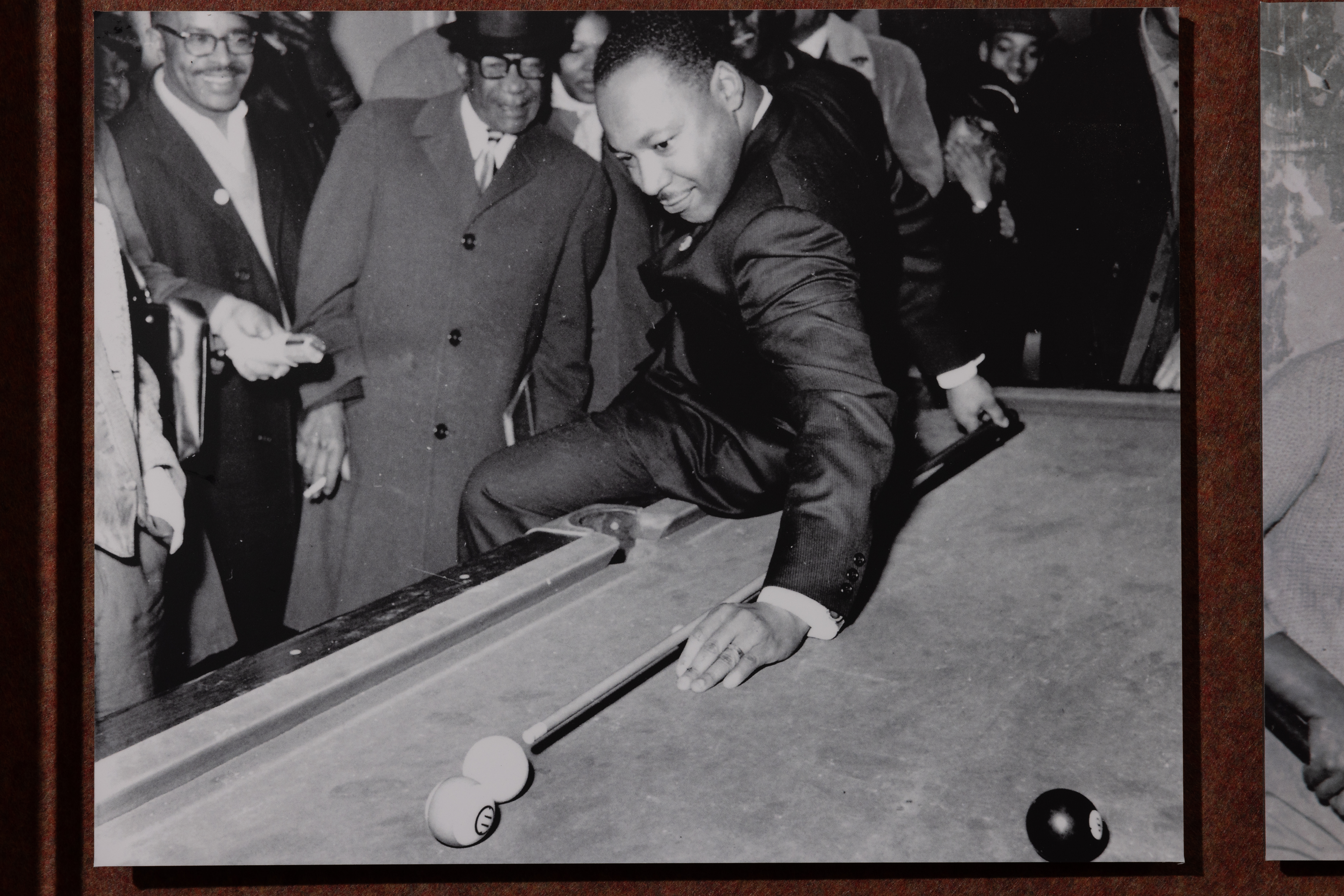
MLK plays pool in Chicago in 1966. He learned to play while a student at Crozer Theological Seminary, where he earned a bachelor of divinity degree in 1951. This is one of the few photos in the institute's collection that depicts MLK having fun.

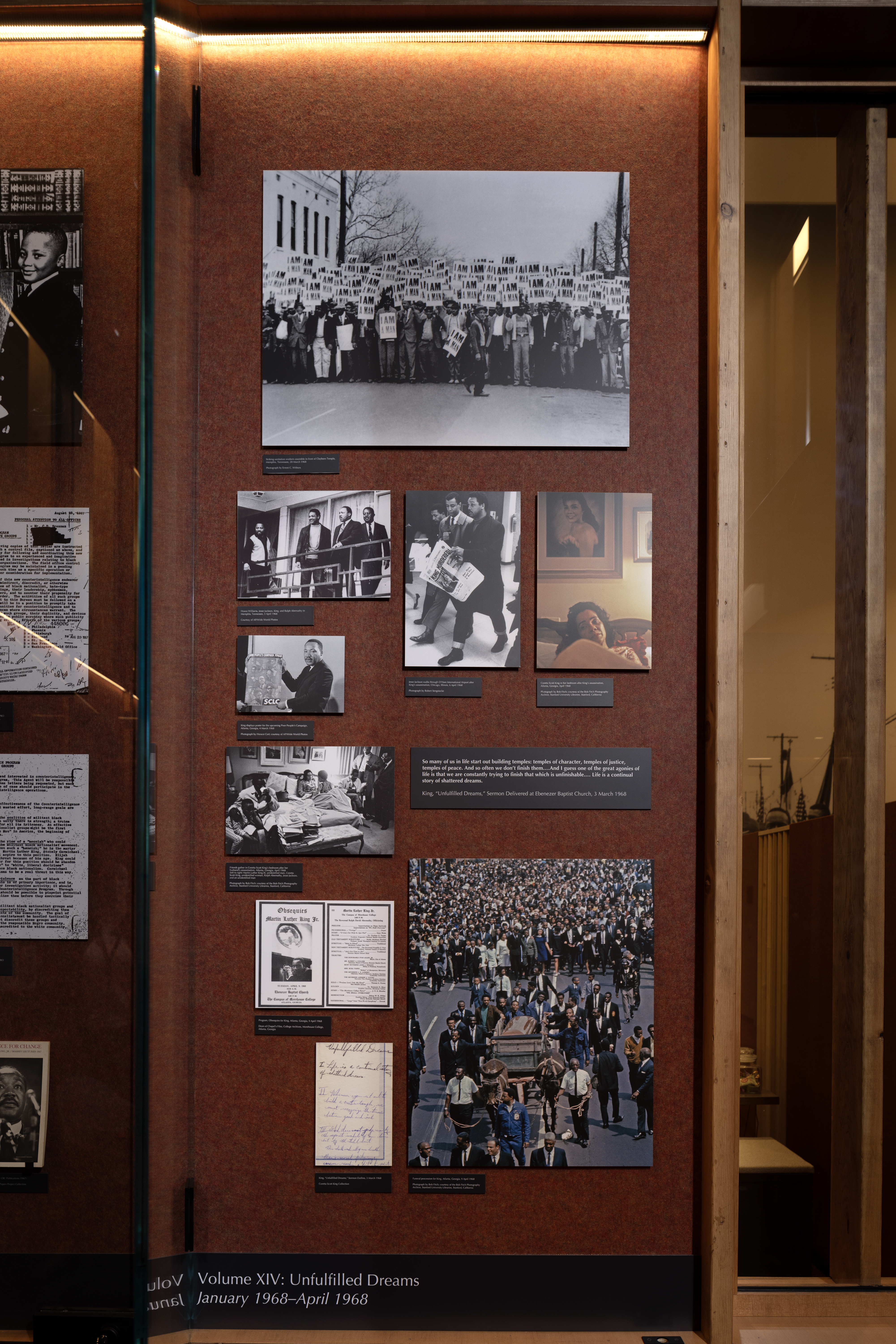
MLK was assassinated on April 4, 1968, and the final panel includes items from that year, including the program from his funeral, an image of his funeral procession, and the outline of his “Unfulfilled Dreams” sermon.

After a national search, Stanford selected Lerone A. Martin to be the institute’s second faculty director in 2022. His academic expertise includes religious traditions in the United States and the intersection of religion and politics in American history.


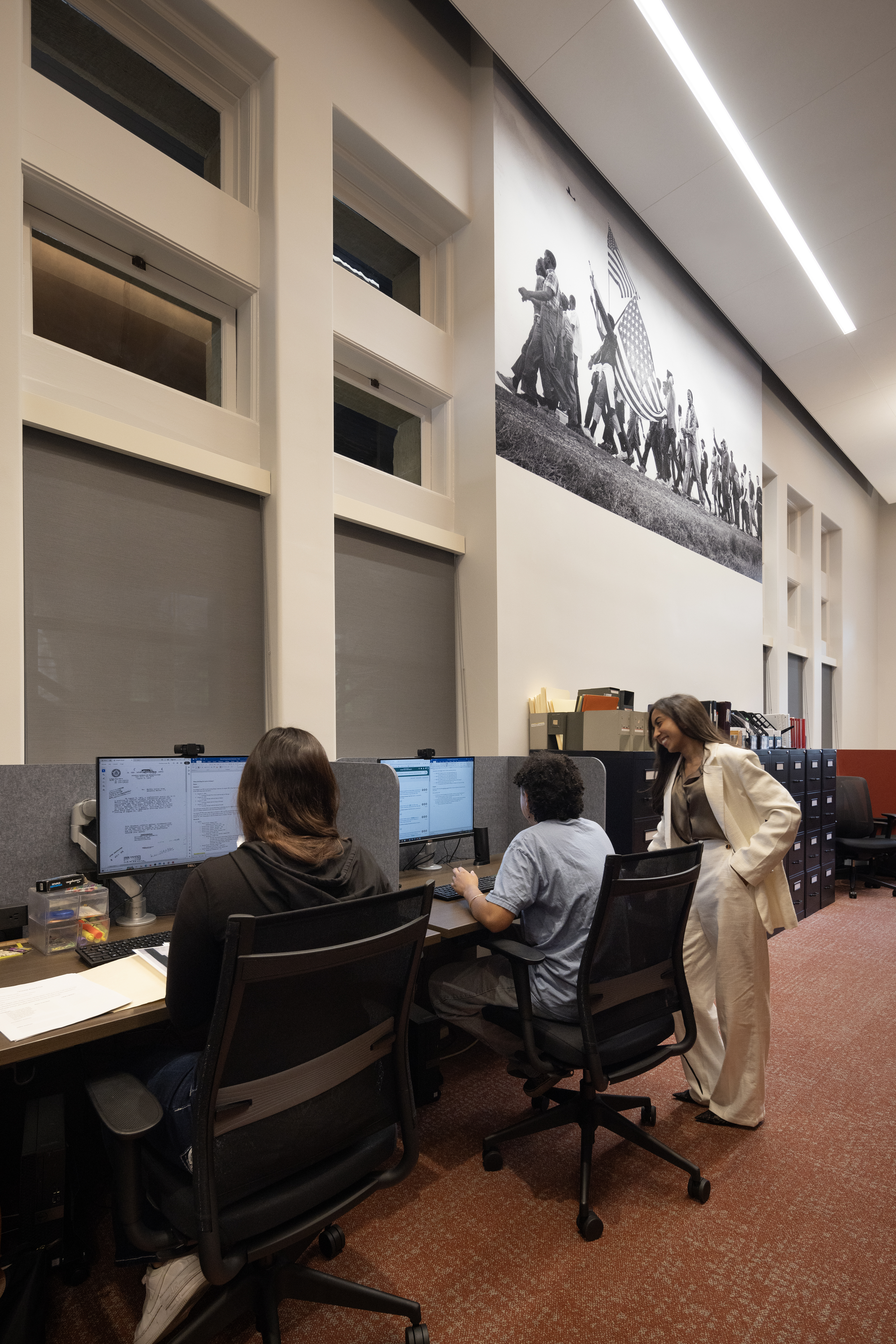
Four workstations are dedicated to student use for transcribing speeches and doing archival research. The black-and-white photo above them shows the 1965 integrated Selma to Montgomery March in support of the Voting Rights Act. It is strategically placed to be visible in the seminar room via a window in the interior wall.

Recent alum Ryan Butler and Martin formed a bond during Butler’s time as a student in several of Martin’s classes. Martin even spoke to Stanford’s football team and recruits at the request of Butler, who played for the Cardinal.

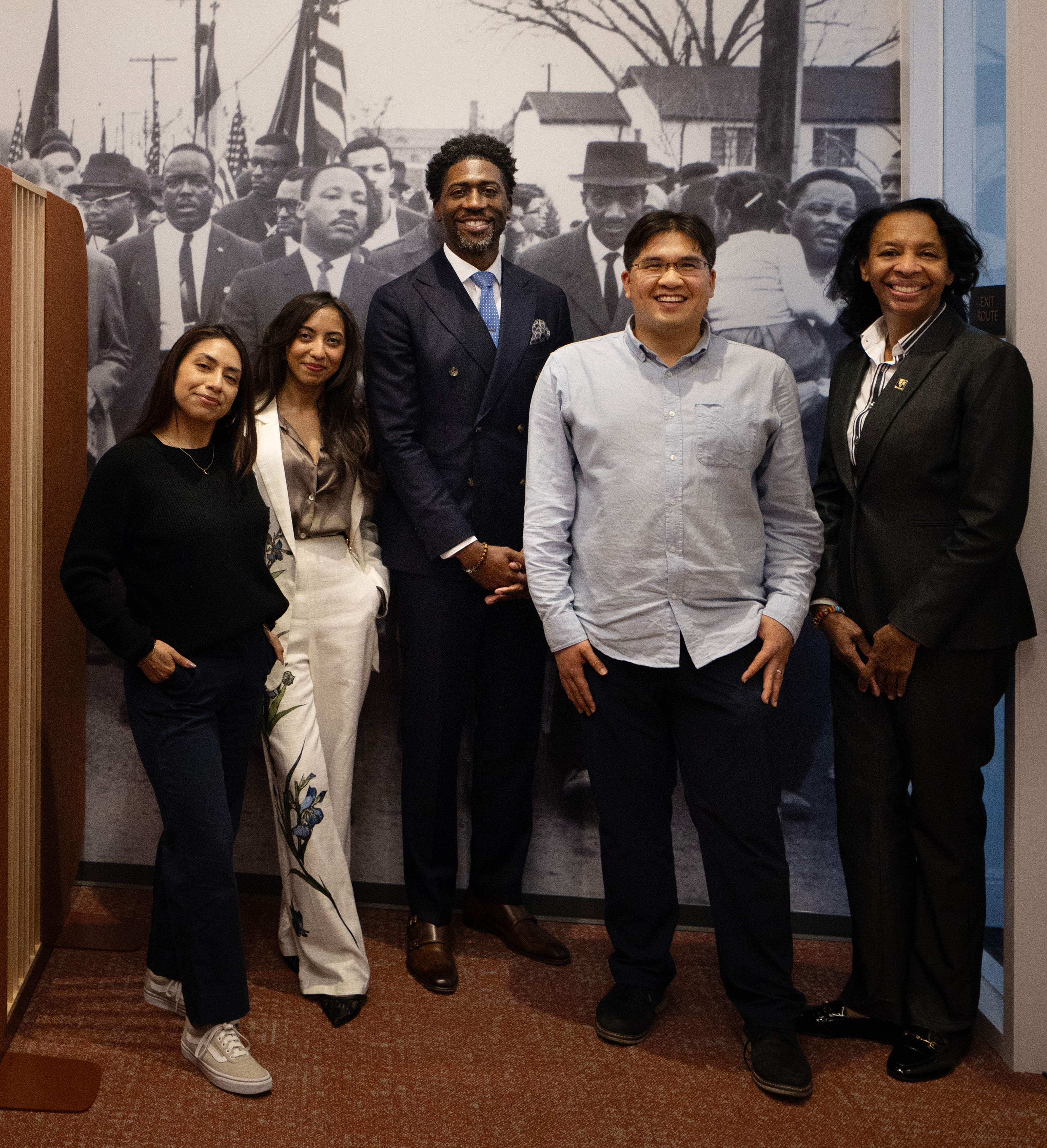
The institute staff includes seven on-site team members, pictured left to right: Jaclyn Santiago, Rabiah Choksi, Lerone A. Martin, David Lai, and Regina Covington. Not pictured are Hazel Lowy and Jorden M. Sharick. There are three remote team members: Tenisha Armstrong, Meghan Cook Weaver, and Brynn Raymond.


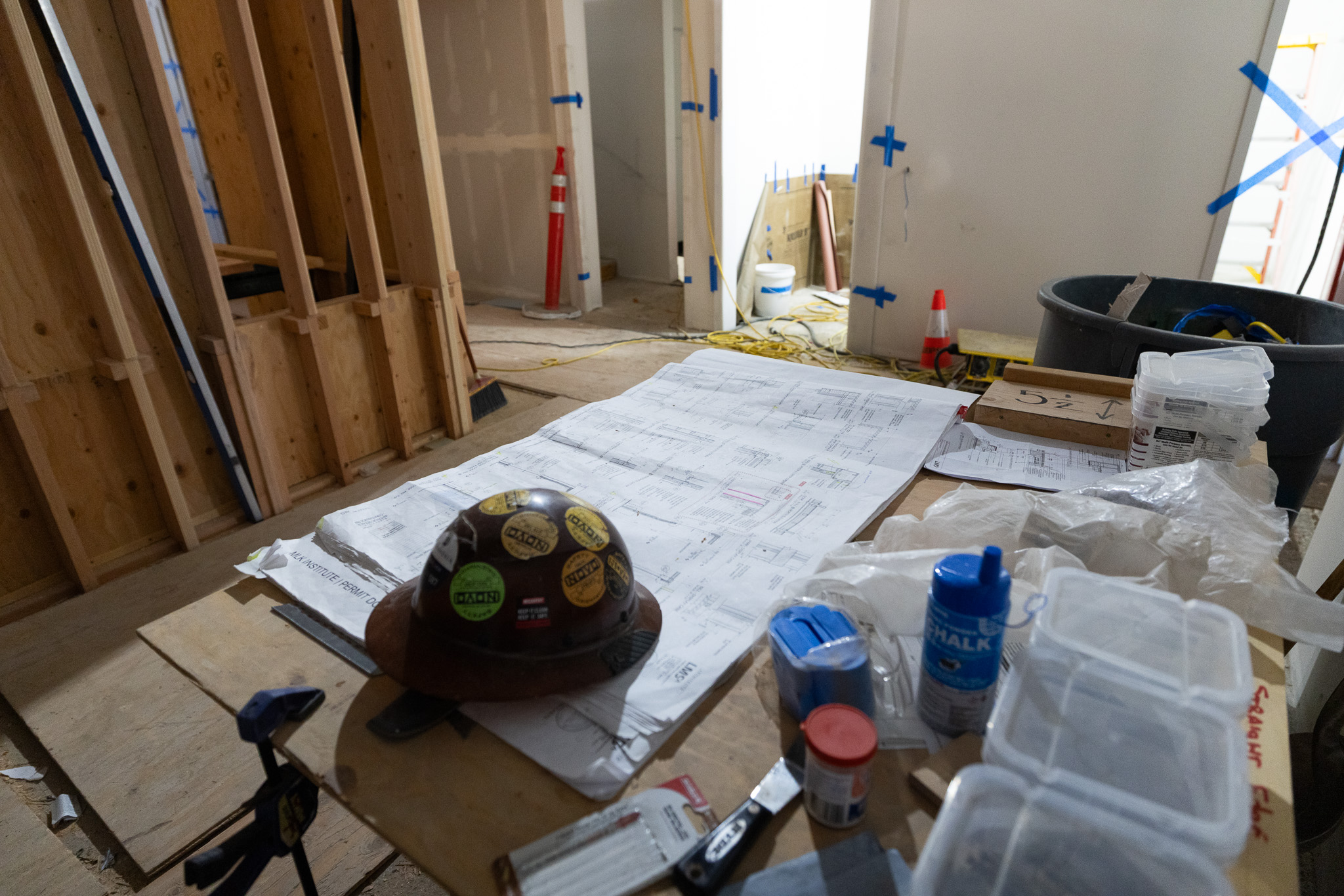
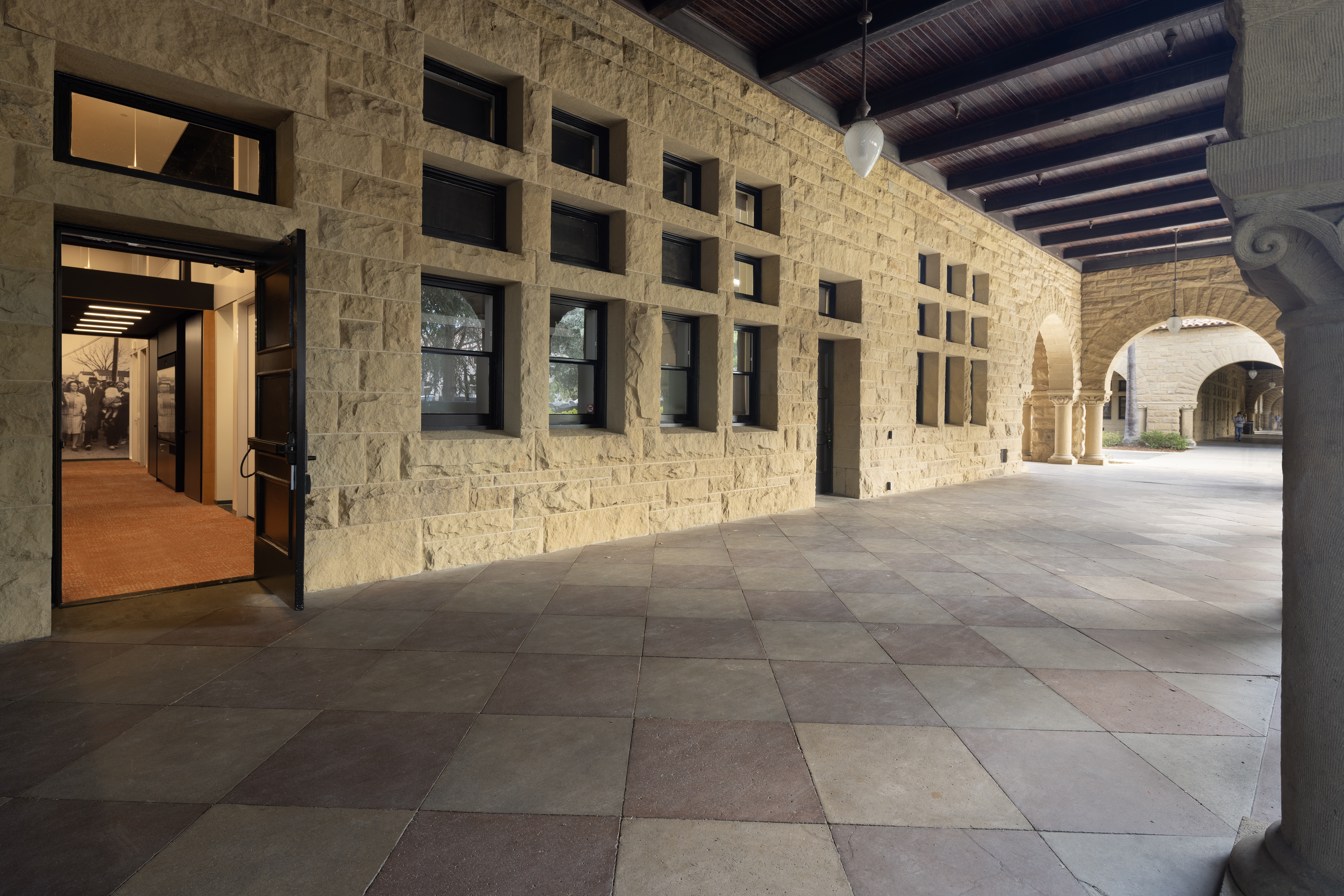
On the west side of the outer Main Quad, the institute faces Lomita Mall. Tours of the space will be part of the Oct. 14 grand opening. After the event, tours will be available by appointment. Email kinginstitute [at] stanford [dot] edu for more information.
---
Carson is also the Martin Luther King, Jr. Centennial Professor, Emeritus.
H&S adds 20 new faculty members

Sarah Peluse named Packard Fellow
Robert E. Hall wins Nobel in economics