Diving into the mind of pioneering French biologist Jean-Baptiste Lamarck
Jessica Riskin’s new book, The Power of Life, offers a deeply researched, amusing account of an overlooked figure.
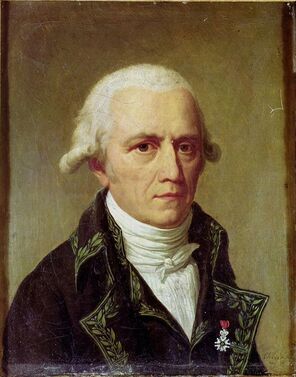
It can be easy to forget, but every occupation was once invented by someone. Think of Julia Child, one of the first celebrity chefs on TV, or Keith Richards, who pioneered the role of the gloriously decadent rock star. For biologists, you have Jean-Baptiste Lamarck, the French naturalist who was the first to use biology in the modern sense of the word. Despite his inventive (and insightful) discoveries as a scientist—in particular, his ideas related to the evolution of species—he was largely forgotten for centuries.
But in recent years, his work has emerged from the dustbin of history, and a new book by Jessica Riskin, the Frances and Charles Field Professor of History in the School of Humanities and Sciences, relays his story with scientific rigor and a pinch of sly wit. One chapter is called “The Cross-Dressing, World-Traveling Botanist and Her Lover (Lamarck Was Neither, but He Ended up with Their Collection.)” It’s the work of a historian of science whose passion for her subject was born during her teenage years, as a self-described “humanistically minded kid in an ocean of science nerds” at Stuyvesant High School in New York City. Blending her own nature with this nurturing, Riskin emerged as someone who deeply understands science and can make it accessible to those of us who don’t—and this book is a perfect example of that skill.
It’s the culmination of devoted research, performed in the decade since her last book, The Restless Clock: A History of the Centuries-Long Debate over What Makes Living Things Tick (University of Chicago Press, 2016). This included reaching out cold to Lamarck’s great-great-great-great grandchildren, one of whom welcomed Riskin into her home, where she kept (among other artifacts and papers) a unique memento from Lamarck’s life. “She said, ‘Oh, I have something you might be interested in,’ and she went rushing over to her front door,” Riskin said. “And there was a bin of umbrellas, and she whipped out a sword.” It was Lamarck’s ceremonial sword from the Legion of Honor, awarded by Napoleon Bonaparte himself (who, it turns out, hated Lamarck).
In this excerpt, Riskin explains Lamarck’s pioneering theory of life and how—like the theory of gravity and the discovery of electricity—it’s an 18th-century concept that remains very much with us today.
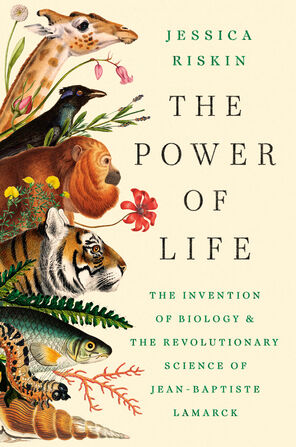
Excerpted from The Power of Life: The Invention of Biology and the Revolutionary Science of Jean-Baptiste Lamarck. Copyright 2026 by Jessica Riskin. Used with permission of the publisher, Riverhead Books. All rights reserved.
The Power of Life and the Inner Feeling of Existence
Lamarck invoked two different sorts of internal, organic agencies propelling the development of living beings from within. The first was a natural force like the forces of contemporary physics,
such as gravity, electricity, and magnetism. For some time already, in his lectures and writings, Lamarck had taken to calling this force the “power of life”: an upward-striving tendency that drove living matter to compose, elaborate, and complexify its organization over time.
Tendencies of one kind or another were very common in physics (as indeed they still are). A little over a century earlier, Isaac Newton had described a universal tendency of common matter by which the planets gravitated toward one another and toward the sun, and by which objects on earth moved downward toward its center. Gravity was a central force in physics during Lamarck’s time, and, of course, it remains so today. Also, during Lamarck’s lifetime, people had been discovering the dynamic and fiery tendencies of electricity, another force that retains its place in current science. Electricity would move through some substances but not others, following metal or water, avoiding glass or wax; it could cause objects to attract and repel one another; and it glowed, sparked, and even created explosions as it moved among different substances.
While Lamarck was a child in the 1740s and 1750s, a Parisian experimental physicist named Jean-Antoine Nollet had performed spectacular feats with electricity in his public courses in Paris. He had channeled the electrical fire into and through all kinds of things including living people: an apparently willing boy suspended from the ceiling by silk cords, 240 members of the royal guard at Versailles standing and holding hands before King Louis XV, hundreds of Carthusian monks obediently doing the same in their monastery, and at the Collège de Navarre, at the top of the Montagne St. Geneviève in Paris, more than 600 people in a linked, rapt crowd. According to an observer, it was “singular” to see “the multitude of different gestures and to hear the instantaneous exclamations of surprise” from hundreds of people at once as they received the electric shock.
Around the same time in Philadelphia, Benjamin Franklin had noted that electricity tended to move toward and through pointed objects, leading him to devise one of the first lightning rods. And in 1785, while Lamarck had been engrossed in his botanical research, a military officer, engineer, and physicist named Charles Coulomb had studied magnetic attraction and repulsion and demonstrated that magnetism followed the same pattern as electricity and gravity. All the forces decreased as the square of the distance between the objects attracting or repelling one another. Magnetism, like electricity and gravity, remains an established force in physics.
If Lamarck’s “power of life” had endured in biology in the same way as gravity, electricity, and magnetism in physics, it’s hard to know how science might have looked over the past two and a half centuries, but surely it would have differed interestingly from the reductive, mechanistic theories of the later nineteenth and twentieth centuries, in which living beings were fundamentally passive, shaped only by random variation and natural selection.
Lamarck of course read Newton, and also Franklin, whose works he kept in one of the bookcases in his garden study, and all the recent research on electricity and magnetism. If inanimate matter exhibited these various behaviors and proclivities, why shouldn’t living matter have its own tendency? The power of life in organic matter began, he said, with the very simplest plants and animals: tiny, fragile, translucent algae and monads. Lamarck wrote that these infinitesimal beings were continually being spontaneously generated: Nature “begins again every day.” He judged that conditions favorable for spontaneous generation existed “exclusively in water or very moist places,” where these most rudimentary organisms were always found, so that “water is the true cradle of the entire animal kingdom.”
Starting with the tiny, spontaneously generated organisms appearing in water, over an “incalculable series of centuries,” driven by the power of life to tend toward ever greater complexity, the simplest forms of life gave rise to every kind of living being. Just as living things were always dying, inanimate things were always becoming animate and embarking on the long process of transformation; it was an immense circle of changes, Lamarck said, these “passages from life to death, and from death to life.”
From the simplest living beings through the most elaborate forms of life, Lamarck described a continuous spectrum of increasing complexity, but at the very beginning, between inanimate matter and the simplest organisms, he identified a threshold. Only living bodies had “individuality,” a kind of integral oneness spread throughout themselves, by which all the parts derived their purpose and character from one another. It was therefore a real mistake, he thought, to try to reduce animate bodies to inorganic ones.
____________
In addition to the power of life, in animals another kind of agency is always at work according to Lamarck: responsiveness, an ability to react to the environment. In the simplest animals, infusoria and polyps, this responsiveness takes the form of a primitive “irritability,” a contractile motion in response to stimulus. This basic capacity distinguishes even the most primitive animals from plants, which—lacking irritability—are incapable of performing “repeated sudden movements” of the sort even elementary animals can make. Moving slightly upward in complexity, Lamarck thinks there might possibly be rudimentary nervous systems in certain animals—such as “radiates” (like starfish) and “fistulides” (such as sea cucumbers)—with nerve fibers allowing for a more elaborate kind of movement, muscular motion. But these animals still have no brain, and therefore no capacity to feel.
The distinction between irritability and sensation is important, Lamarck says: Animals can move without sensation and vice versa. For this reason, he rejects an utterly grisly set of experiments performed by the doctor and physiological researcher—and, apparently, wanton sadist—César Legallois, in which Legallois decapitated baby rabbits, or sometimes severed their spinal cords at the neck to fully paralyze them, then forced air directly into their lungs. From the fact that their limbs moved, he concluded that the artificial respiration had fully restored “sensation and voluntary motion.” Legallois describes in detail how the rabbits’ mouths gasped for air while he repeatedly extinguished and reawakened movement in their bodies. The experiment is useless, Lamarck writes. The movements tell you nothing about the animals’ sensations, only about the irritability of their bodily fibers. No experiment that triggers involuntary motion in an incapacitated animal, he says, can reveal anything about sensation or voluntary motion. If the animal’s nervous system is intact, we can assume it is suffering, while the experimenter is learning nothing.
Whether or not there are animals having muscular motion but lacking sensation, Lamarck writes that all animals starting from the level of insects have both. This is because they have nervous systems in which the nerve threads come together in a single “medullary mass,” or brain, which he calls the “special organ of feeling”: It endows animals who have it with sensations and an “inner feeling of existence.” Insects can experience “simple and fugitive perceptions when any object affects them” and perhaps also some rudimentary “inner emotions.” The more complex the animal, the more developed the inner feeling. Birds and mammals have not only a brain—a medullary nexus of nerves—but what Lamarck calls a “hypocephalon,” which he identifies as the “organ of intelligence” (which today goes by the name “cerebral cortex”). It consists of “two wrinkled, pulpy hemispheres” enveloping the brain. This organ brings the “faculty of will”: the ability to form complex ideas, produce judgments, and act upon them.
In its most developed form, the hypocephalon allows a being to “think, reason, invent, and perform various intelligent acts.” When the environment creates a need, animals with a hypocephalon respond to it by willfully undertaking new actions. They form “habits” and “penchants.” Whenever they decide to perform a given action, the fluids in their body move into the necessary organs and limbs to bring the action about. By many repetitions of this process, animals can strengthen, extend, and even create the necessary parts. Therefore, by acts of will—exercising or failing to exercise their various parts and organs—the more complex animals transform their bodies. These transformations are infinitesimal, Lamarck acknowledges, but he believes they can be inherited by the animals’ offspring, accumulate over thousands and thousands of generations, and so account for how animals have achieved their current forms. By adapting their behavior to their environments, they are always gradually making and remaking themselves.
“When my dog is out for a walk,” Lamarck reports, “and sees in the distance another animal of his own species,” he clearly experiences a visual sensation that emotionally affects his inner feeling. It then guides his nervous fluid into his muscles, propelling him immediately and impulsively toward the fellow dog he sees. At other times, watching his dog dreaming, “barking in his sleep, and giving unequivocal signs of the thoughts which agitate him,” Lamarck writes that he becomes “convinced that he too has ideas.”
The desires and fears of animals are the driving forces in Lamarck’s theory of transformation, and he thinks these should be central topics in zoology. It’s obvious that “many animals possess feelings and that some also have ideas and perform intelligent acts.” Lamarck finds it to be the most “curious and interesting” subject, and also the most difficult, to try to understand how material parts can produce ideas and feelings. After all, intelligence is surely a natural phenomenon—sensations and thoughts are no more miraculous than other natural things—and so they must result from physical causes. The inner feeling of existence is at their very crux.
H&S adds 20 new faculty members

Sarah Peluse named Packard Fellow

Robert E. Hall wins Nobel in economics