Fellowship program positions students to lead at intersection of public policy and technology
Stanford’s Tech Ethics and Policy Fellowship illuminates the path to careers integrating social science and technical know-how in government, corporate, and nonprofit settings.
In the 2024 election cycle, people affiliated with Silicon Valley spent nearly $400 million on the presidential campaign alone, according to an analysis by The Guardian. Meanwhile, government regulation around everything from artificial intelligence to cryptocurrency is always changing, both at home and abroad, with both big tech and civil society groups lobbying regulators and elected officials.
All of which is to say there’s never been a better time for the Tech Ethics and Policy (TEP) Fellowship program, a collaborative project between the McCoy Family Center for Ethics in Society, part of the Stanford School of Humanities and Sciences (H&S), and the Stanford Institute for Human-Centered Artificial Intelligence (HAI). Designed to appeal to students with a tech background looking to learn more about public policy, and vice versa, the program has offered students real-world experiences in public interest technology for the past three years.
“As computer science has become the most popular major on campus and Silicon Valley has succeeded in transforming the world through the digital revolution, the social, political, and economic consequences of digital technology, and AI in particular, have become impossible to ignore,” said Rob Reich, the McGregor-Girand Professor of Social Ethics of Science and Technology and professor of political science in H&S. A senior fellow at HAI and faculty director of Ethics, Society, and Technology (EST) initiatives at the ethics center, Reich also co-wrote System Error: Where Big Tech Went Wrong and How We Can Reboot (HarperCollins, 2021), a manifesto of sorts on how to upgrade democracy for the AI era.
“Traditionally, if you worked in the government, you needed to hire two people in order to get policy and technical expertise in house,” Reich said. “The same was true in a tech company—you needed to hire a technical expert and someone who did policy. I want to create a generation where the people who flow out of Stanford have both at the same time.”
A growing field, with opportunities still being defined
The program, which serves undergraduate and graduate students, arose out of concerns both big and small about the ways in which technology was shaping government and society. In addition to issues around democracy and policy, there were more practical considerations for students, such as how to find work in these fields and put their learnings into practice.
“It's really easy to talk theoretically about the ethical issues in technology, but it's very different to negotiate those real issues in a corporate context,” said Ashlyn Jaeger, director of EST initiatives at the ethics center. “In response, we developed the fellowship, trying to illuminate what the different pathways are.
“The field is growing,” Jaeger added. “There's a lot of interest in having students with these interdisciplinary skills. And the students really want jobs where they can feel like they're doing some good in the world.”
“One of the best things I did in my Stanford career”
Following a spring course called Introduction to Tech Ethics and Policy Career Pathways, students are placed in 9-week summer fellowship positions, with past placements including the White House Office of Management and Budget and Credo AI.
More tech, ethics, and policy opportunities at Stanford
Computational Public Policy and Science and Technology Policy concentrations within the public policy undergraduate degree
Computational Social Science and Human-Centered Artificial Intelligence concentrations within the symbolic systems undergraduate degree
CS+Social Good student group and courses
Data Science and Social Systems subplan of the bachelor of arts in data science
Ethics and Technology undergraduate minor
Haas Center for Public Service Cardinal Courses in engineering and technology
PIT Lab student group
Politics and Policy and Social Dynamics of Data and Information concentrations in the science, technology, and society undergraduate degree
“I think it's one of the best things I did in my Stanford career,” said Emily Tianshi, a graduate student in computer science who was a fellow in 2023, the program’s inaugural year. She also earned an undergraduate degree in data science and social systems, another Stanford program bridging tech and social science. “In my cohort, there were people from the sociology side and people from the education side and people from the activist side, and we were able to share different parts of our experiences and benefit from that.”
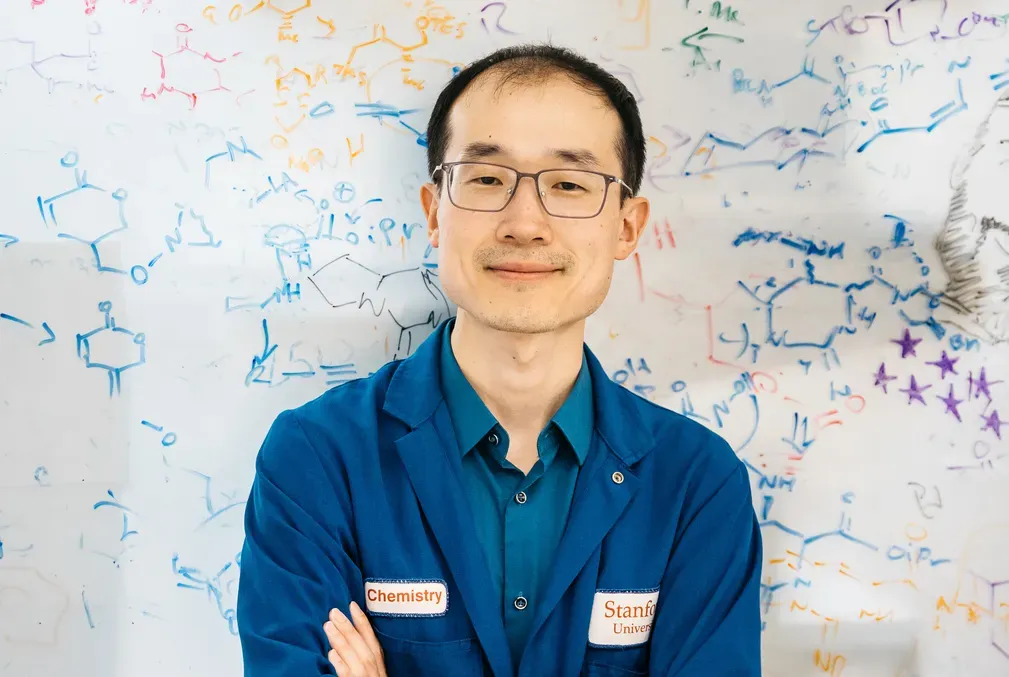
Ayesha Khawaja, who graduated in 2024 with an undergraduate degree in symbolic systems, is a former TEP Fellow who now works as a software engineer at the legal services software and public interest tech company Formally. “I majored in symbolic systems because I was interested in computer science, but I also wanted a more holistic education that incorporated things like philosophy, ethics, psychology, that sort of thing,” she said about why the fellowship appealed to her. This in turn enabled her to contribute during a digital ethics internship at Avanade, an IT consulting company, and now at Formally. “The cool thing is, because I have that background, I feel very comfortable with bringing up concerns, and I feel like I have the knowledge that I need to think about these issues when we're building products,” Khawaja said.
This past summer, four undergraduate fellows worked at the California Department of Technology doing everything from evaluating how the state uses technology to serve vulnerable communities to suggesting ways to improve the state’s internal technological tools.
“We have this wonderful opportunity in California to partner and collaborate and learn from some of our best universities, including Stanford,” said State Chief Technology Innovation Officer Vera Zakem. “We got these four incredible women who were really committed to public interest technology. There is such a growing need these days to really develop strategies and technology that serve the public interest, in order to actually build trust between technology and society. This program is preparing the next generation of leaders to do exactly that.”
The application for this year’s TEP cohort is open. There are two versions: one for undergrads and one for graduate students. Interested students should apply by Dec. 1.
Acknowledgments
TEP fellowships are made possible through Stanford’s partnership with the Project Liberty Institute.
New undergraduate minor launches in civic thought and practice
Adrien Bilal selected for Time100 Next

Peter M. Ray, biologist with a passion for winemaking, has died at 94