Global plant diversity evolved mostly from staying in place, not dispersing
A Stanford-led study tracked the evolutionary processes underlying about 90% of the world’s plant species over the past 66 million years and found that plants diversified most often from thriving where they were rather than moving to new areas.
For plants, diversity is homegrown. New research published in Science followed the evolutionary paths of more than 300,000 plant species, tracking their development since the time dinosaurs went extinct, roughly 66 million years ago.
The study showed that about 78% of plant diversity can be attributed to “in situ speciation,” meaning the majority of plant species evolved over an extended period of time within the areas where they originated, rather than through dispersal across regions.

“Many plants have lived in the places where they are found today for a very long time,” said lead author Barnabas Daru, assistant professor of biology in Stanford’s School of Humanities and Sciences. “The diversity of plants we see now comes from a long evolutionary history that has taken millions of years to form.”
Our species, Homo sapiens, has existed for only about 300,000 years, compared to plants that have been around for many millions of years. Although humans arrived on the scene much later, we are now influencing overall plant diversity in unprecedented ways, Daru said.
“Modern human impacts—such as climate change, invasive species, pollution, and habitat destruction—are threatening to erode, or even erase, the rich evolutionary history that plants have accumulated,” he said.
The process behind the pattern
Previous research on plant diversity has focused on the distribution patterns of species, showing that many different plants can be found in some places, such as the Amazon and Congo basins as well as southeast Asia, while other areas are home to fewer species, such as the northern regions of Europe, Asia, and Canada.
The current study moved beyond describing those patterns to focus on the large-scale evolutionary processes underlying them: immigration and emigration—the movement of species into and out of regions; extinction; and in situ speciation—when plants evolve into new species within their regions of origin.
While evolving in place accounted for most plant diversity, dispersal through immigration and emigration made up about 16%. The researchers also noted that dispersal events were more frequent in recent evolutionary history and occurred more often in the Eastern Hemisphere.
The region with the most plant diversity, the Neotropics, which spans South America, Central America, and the Caribbean, also showed the highest evidence of in-place evolution. This underscores the importance of species-rich areas like the Amazon in explaining the diversity of plants worldwide.
Extra computing power required
One of the biggest challenges to this study was simply the massive amount of data involved to track 90% of the world’s plant species and their evolutionary relationships over millions of years.
The researchers made the task more manageable by first mapping the changing distribution of plant species within seven large biogeographic realms of the world. They also divided evolutionarily connected species into “clades,” essentially groups of 10 to 100 biologically related plant species. Then, they ran analysis models using Sherlock, Stanford’s high-performance computing cluster. Even with that extra computing power, a single run of the analysis took three months.
“One of the reasons why this probably has not been done before is the computational requirements for the analysis,” Daru said. “The Sherlock computing cluster made it possible. This is not something you can do on a standard desktop computer.”
The authors have made their data framework and analysis available as part of this study, so other researchers can potentially use it to investigate the diversification process for other living things such as mammals, insects, or microorganisms that commonly associate with plants in different ways.
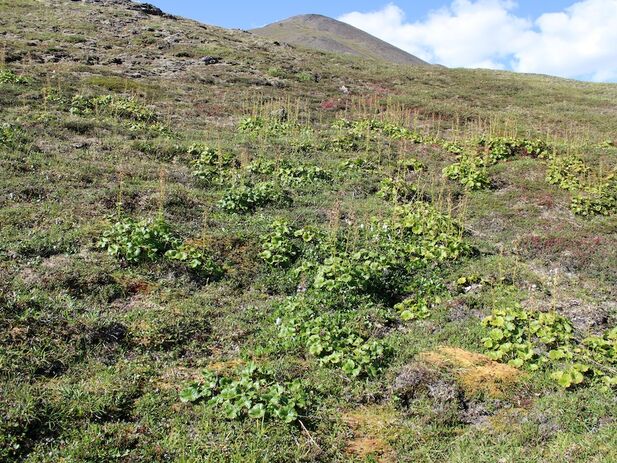
Daru’s lab is also working to refine the methods and software so they can be used to uncover the smaller scale evolutionary processes within those large biogeographic realms. For instance, within the Nearctic realm, which includes North America, there is huge variation, from California’s lush Mediterranean landscapes to the low diversity areas of the Alaskan and Canadian tundra.
Studying plants’ deep evolutionary history is critical to understanding the threats to their future—and ours, since, as Daru points out, everything including humans depends on plants.
“Investigating the evolutionary history helps us understand how plants will respond to the ongoing changes,” Daru said. “Knowing the past is very helpful to knowing how to respond or adapt to the future.”
Acknowledgments
Daru is also a fellow at the Stanford Woods Institute for the Environment.
Additional co-authors on this study include researchers affiliated with the University of Chicago and the University of Maine.
This research received support from the National Science Foundation, the Alfred P. Sloan Foundation, and Stanford Woods Institute Big Ideas for Oceans.

H&S adds 20 new faculty members

Sarah Peluse named Packard Fellow

Robert E. Hall wins Nobel in economics