Jorge Ruffinelli, leading scholar of Latin American literature and film, dies at 82
Living in exile from his native Uruguay, the highly respected professor spent most of his career at Stanford and taught a range of courses.
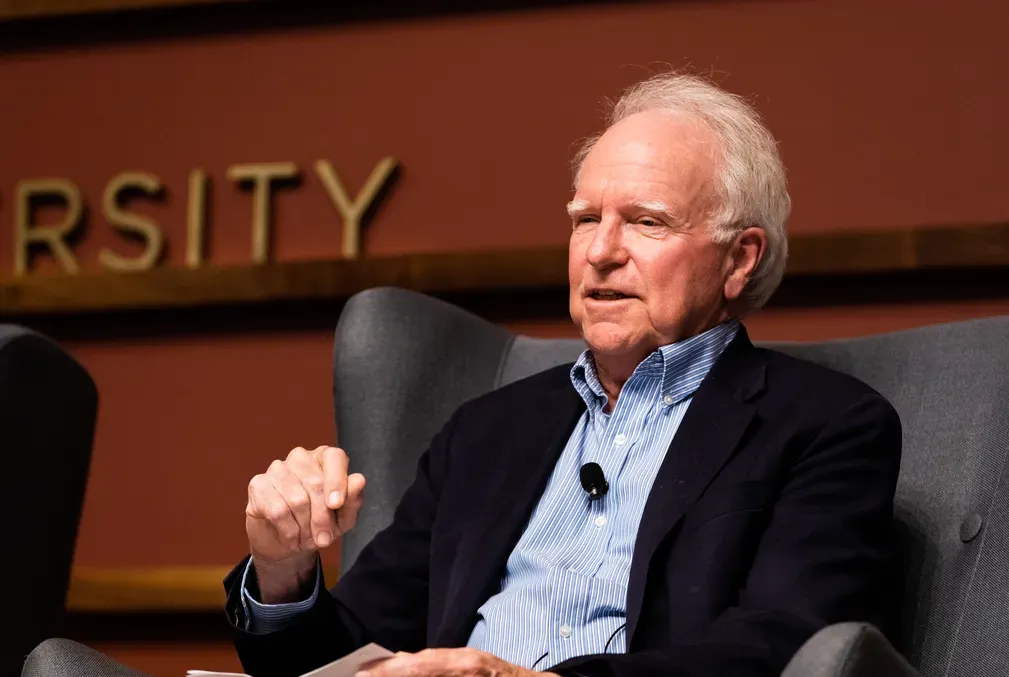
Jorge Ruffinelli Altesor, professor of Iberian and Latin American cultures, emeritus, in the Stanford School of Humanities and Sciences, and a leading authority on Latin American cinema, died Feb. 4, 2026. He was 82.
Living in exile from his native Uruguay, Ruffinelli taught at Stanford for more than three decades. He was best known for his work as a scholar of Latin American cinema, writing about thousands of films across 20 books, 500 articles, an encyclopedia (which he worked on for nearly 20 years), and several journals (which he founded). In 1993, he co-directed a documentary on the Guatemalan writer Augusto Monterroso. Through this body of work, Ruffinelli earned international stature as a leading cultural historian, and he served on the juries of the San Sebastián, Havana, and Trieste film festivals.
“Jorge would allow others to entertain the fantasy that he had watched every Latin American film ever made—thousands upon thousands of films, auteur and otherwise!” said Héctor Hoyos, professor of Iberian and Latin American cultures in H&S. “What made verisimilar that impossible premise was his vast collection and uncanny recollection of at least hundreds of them. From the Golden Age of Mexican Cinema to New Argentine Cinema and across many other national industries and more artisanal circuits, Jorge had prominent actors and directors at his fingertips—often literally, as he conversed over the phone or later by email with several of them. His pioneering, internationalist literary and film criticism serves as a timely reminder to see the world through others’ eyes.”
A connoisseur of Latin American literature and film
Ruffinelli arrived at Stanford as a professor of Spanish and Portuguese in 1986, having already established himself as a leading scholar of Latin American literature. In 1988, he published the first issue of a journal devoted to Latin American literature and film, Nuevo Texto Crítico, which he co-founded and directed until its final issue in 2016.
In the 1990s, he served as chair of the Department of Iberian and Latin American Cultures twice and did two stints as director of the Center for Latin American Studies, in 1994 and from 1997 to 1998. During this time, he continued to publish prolifically, writing on literary lions including Juan Rulfo, Juan Carlos Onetti, Mariano Azuela, and more. His notable books included Latin America in 130 Films (Uqbar Editores, 2010) and Latin America in 130 Documentaries (Uqbar Editores, 2012). He also curated several documentary film festivals at Stanford.
Pedro J. Pérez Leal, director of the Bing Overseas Studies Program in Madrid, reflected on when the program hosted Ruffinelli as a faculty-in-residence in spring 2016.
“Students loved his course on Madrid in film,” Leal said. “But what I remember most vividly is our BOSP trip to the Basque Country, where Jorge and his wife, Cristina, embraced every moment with the enthusiasm of the most curious students—the same passion he brought to teaching film and literature. Above all, I remember Jorge as a deeply kind and generous man.”
On campus, he was a beloved and respected teacher who mentored generations of students and was adored by staff.
“I first met Jorge when I was a master’s student at Stanford, already admiring his extraordinary intellectual life and literary roots in Uruguay,” said former student Mariana de Heredia, now a senior product lead at DECAID Academy in Berlin. “When I began considering a PhD, his encouragement gave me the courage to pursue a path I might otherwise never have dared to take. During the five years of my doctorate, he was my mentor and guide—we taught together, organized conferences, and shared countless conversations about literature and film. Even after I moved to another continent, he continued to support me with the same warmth and generosity. I owe so much of my path to his open-hearted mentorship.”
An academic in exile
Born in 1943 in Montevideo, Uruguay, to an agronomist father and a mother who worked in the home, Ruffinelli grew up in the city but spent childhood summers in the country with a horse his uncle gave him. He remembered seeing his first on-screen kiss at age 4, according to a 2013 interview with Apuntes, an online journal.
He found success early on, joining the seminal Uruguayan weekly Marcha as chief literary editor and working with the influential critic Ángel Rama while still a student at the University of Uruguay. Ruffinelli left the country after a military coup; later, a warrant for his arrest was issued because of a controversial short story he edited for Marcha. (The author ended up in jail and was tortured.)
Ruffinelli found work teaching Latin American literature in Buenos Aires, Argentina, and then fled that country’s coup for Mexico, where he taught at the University of Veracruz. During this time, he also founded the journal Texto Crítico, a precursor to the Nuevo Texto Crítico publication he later founded at Stanford.
After retirement, he spent time with family and his dogs. He is survived by his wife, the poet and translator Cristina Meneghetti; his children, Alvaro, Andrea, Gerardo, and Paula; and his grandchildren, Joaquin, Josefina, Justine, Jeremiah, and Jerónimo.
A memorial service for Ruffinelli will be held Saturday, May 9, 2026, from 2 p.m. to 4 p.m. at Bolívar House on the Stanford campus.
Robert E. Hall wins Nobel in economics
New undergraduate minor launches in civic thought and practice
Adrien Bilal selected for Time100 Next