New book illuminates Martin Luther King, Jr.’s childhood
Lerone A. Martin’s Young King reveals the boy behind the man.
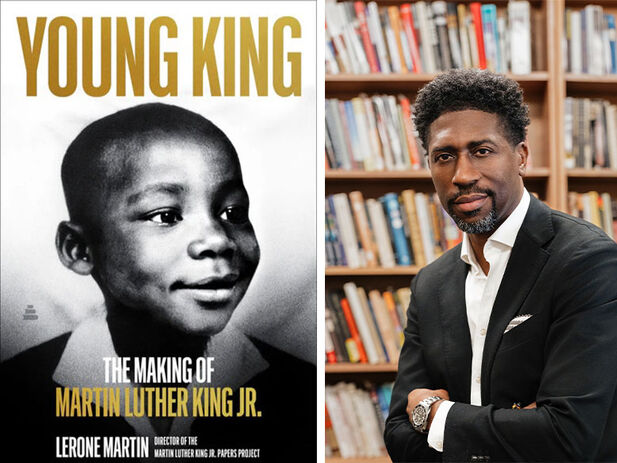
Lerone A. Martin, the Martin Luther King, Jr. Centennial Professor and director of Stanford’s Martin Luther King, Jr. Research and Education Institute, might not seem like he has much in common with Cher. But there is one thing: Both had books on BookPage’s list of the most anticipated nonfiction of 2026. And while we can’t speak to Cher: Part Two, we can confirm that Young King: The Making of Martin Luther King Jr., Martin’s exploration of the civil rights leader’s adolescence, is worth the wait.
The book focuses on a part of King’s life that many biographies treat glancingly, if at all: his childhood. Thanks to original interviews with some of King’s classmates, alongside groundbreaking research into this era of King’s life, Martin—who is also a professor of religious studies and of African and African American Studies in the School of Humanities and Sciences—paints King as a recognizable (if precocious) kid making decisions and mistakes, rather than the secular saint he has become in American life.
We spoke with Martin about how being a father helped inspire the book and how he shed new light on a much-admired—and much-chronicled—figure.
This Q&A has been edited for clarity and length.
Question: King as a ball hog on the basketball court. Roughhousing with his brother over Monopoly. A high school Romeo and master of the jitterbug. A tweed-wearing dandy who wants to do anything but become a preacher. This is a different King than we’re used to seeing. Why did you want to tell this side of his story?
Answer: I think it’s important to tell the story of the man and how the man was made, as opposed to the events that made him famous. Some people assume that it was inevitable, that King was going to be Dr. Martin Luther King, Jr. I wanted to point out that it wasn't inevitable; I wanted young adults to be able to see themselves in him so they can think, “OK. It’s possible for me to do great things for my community, even though I may not have been a perfect teenager. I may have been a ball hog.”
I think it’s so important for young adults to recognize that they don't have to be perfect in order to do something great. They just need to be committed. King's life shows us that.
I also think it’s important for parents. I wrote the book in some ways because I’m raising three boys—one is a teenager, and another is a preteen. I’m watching the teenager make mistakes and do things that make me want to pull my hair out. It was good for me as a parent to be learning about King and thinking about how his parents raised him to be committed to service and to be committed to others, even as they were frustrated with some of his teenage behaviors. Perhaps King’s story can change the way we look at young people, especially young people of color, so that we don't just write them off when they make a mistake, so that we realize that they're teenagers.
Question: What else might surprise people about the young King?
Answer: When he won the NAACP award, his friends were being interviewed and talking about everyone going crazy over this guy because he's nonviolent. They were saying, “Let me tell you. When we were growing up, that guy was tough: He wrestled you. He was trying to kill you on the basketball court.” It was cool to find those 1950s recollections of people who knew him.
Question: The other side of the book is seeing his adolescent pain, including a shooting at King’s school when he was 14. How did that shape him?
Answer: It seems clear that the violence at the high school was one catalyst that led King and some of his peers to seek a better learning environment and apply to go to college early. The fact that World War II was going on and Morehouse College had lost so many students to the war opened up the door.
But we can only wonder how that type of violence shaped him to become an advocate of nonviolence.
Question: Were there any surprises for you in the research process?
Answer: Finding the minutes of the 1934 Baptist Convention of Georgia, which note, “Master M.L. King, age five, sang and was given a rising vote of thanks.” I liked imagining this 5-year-old singing in front of this large statewide convention. It really brought it to life for me. The school shooting was also a big surprise to me, just because I’d never heard of it. I stumbled upon it in the Atlanta Daily World, the Black newspaper.
Question: What else?
Answer: Learning about Juanita Sellers. I did not set out to write a whole chapter on her, but she became such an important figure as I learned about her through the Atlanta Daily World and the student newspaper at Spelman College, where she was the “Miss Everything” on campus. She and King were supposed to get married; his parents wanted him to marry her. They had this informal engagement, as King called it, almost like being betrothed, and they kind of went back and forth for years. Their lives remained parallel in some ways, even though they didn't get married.
The other surprise was I wrote a chapter on Jewelle Taylor, whom he dated briefly. I checked out Taylor’s memoir after a tip from my colleague Regina Covington, who had met Taylor when she visited the institute. The story was amazing. Taylor ended up marrying James Lowell Gibbs, a professor of anthropology at Stanford who eventually became the first Martin Luther King, Jr., Centennial Professor. That's the title that I currently have. It brought the story back home to me. I was honored to discover that, by virtue of this position, it put me one step closer to King.
Question: How did the university support you in your work?
Answer: The staff of the King Institute, both current and past, were absolutely amazing in the work that they collected, which enabled my research for the book. In particular, they alerted me to little-known and unpublished materials they had come across in their collective decades of research. Staff also alerted me to the existence of unpublished materials including oral histories and autobiographies of MLK contemporaries, as well as interviews with MLK and his college professors.
And the university as a whole learning community was so helpful to me—people asking me questions about the book, telling me stories about raising their kids and not even realizing they were helping me. You can’t beat Stanford as a learning community, with its expectation for excellence and its ability to attract excellent folks who listened to me talk about my work all the time, read parts of the book, and gave me feedback. I don't think I would have been able to write this book the same way if it wasn't for Stanford University, broadly speaking, and the King Papers Project at Stanford specifically.
Question: What does it mean to you to be publishing this book at this particular time?
Answer: One of the things I hope the book does is point out the importance of learning environments and learning institutions in shaping young people. Another is how violence motivated by racial difference can shape young adults. I also hope that this is a moment where King's humanness is not seen as a weakness but a strength that inspires us. If he was able to do it—to overcome selfishness, to overcome fear, to cultivate courage—then I can do it, too.
There will be a book release party and signing on Tuesday, May 5, at 4:30 p.m. at the MLK Institute on campus. Martin will also be at Kepler’s in Menlo Park on Thursday, May 14, at 7 p.m.; the San Francisco Commonwealth Club on Wednesday, June 3, at 5:30 p.m.; and the First Presbyterian Church of Palo Alto on Wednesday, June 10, at 7:30 p.m.
H&S adds 20 new faculty members
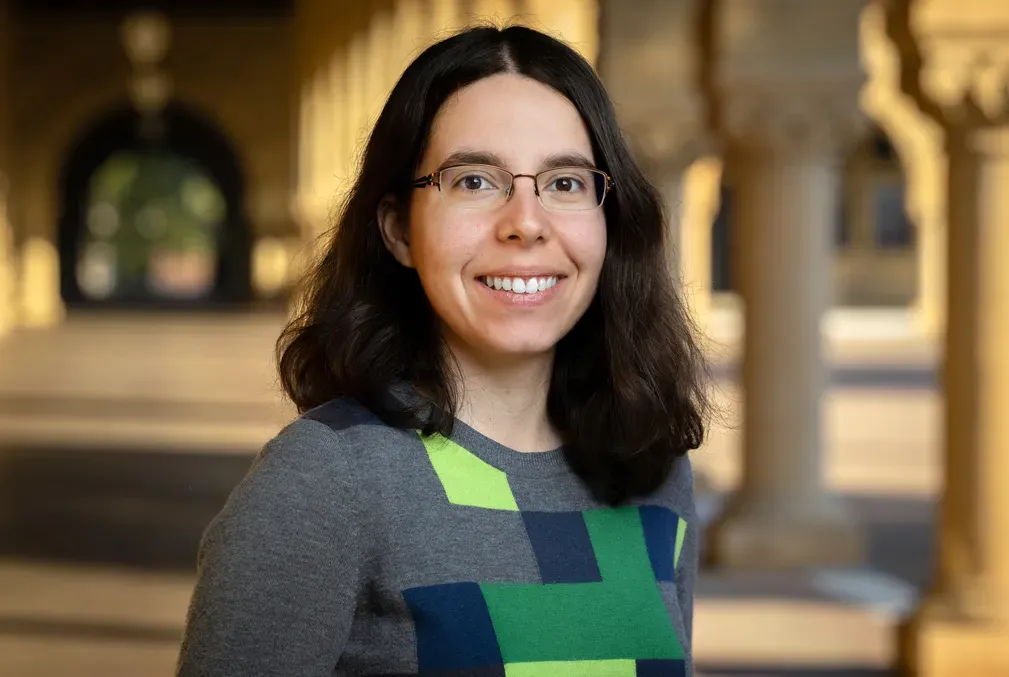
Sarah Peluse named Packard Fellow
Robert E. Hall wins Nobel in economics